Blog 1: Classical Conditioning
Many marketers have figured out that learned connections between products and memories is a powerful way to build and keep brand loyalty. So how do consumers learn? Consumer learning is a process by which individuals acquire the purchase and consumption knowledge and experience that they apply to future related behaviour.
There are several theories that have been developed to help explain the learning process. One theory focuses on the simple stimulus and response connections. This is called the behavioural theory. The behavioural theory assumes that learning takes place as the result of responses to external events.
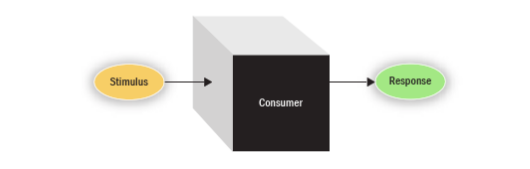
This theory is majorly represented by the concept of classical conditioning, a concept which Adidas has greatly demonstrated through there marketing efforts. Classical conditioning is where a stimulus is paired with another stimulus and the response transfers to the new stimulus.
One way Adidas has used classical conditioning is through their “Calling All Creators” campaign by pairing celebrities, athletes and musicians with Adidas products in the commericial to evoke a positive response from the consumer to the Adidas brand. The campaign that was launched at the end of 2017 features superstar athletes such as Lionel Messi, James Harden and Paul Pogba to name a few while also reaching beyond the realm of sports, with appearances by Pharrell Williams, Karlie Kloss and others.
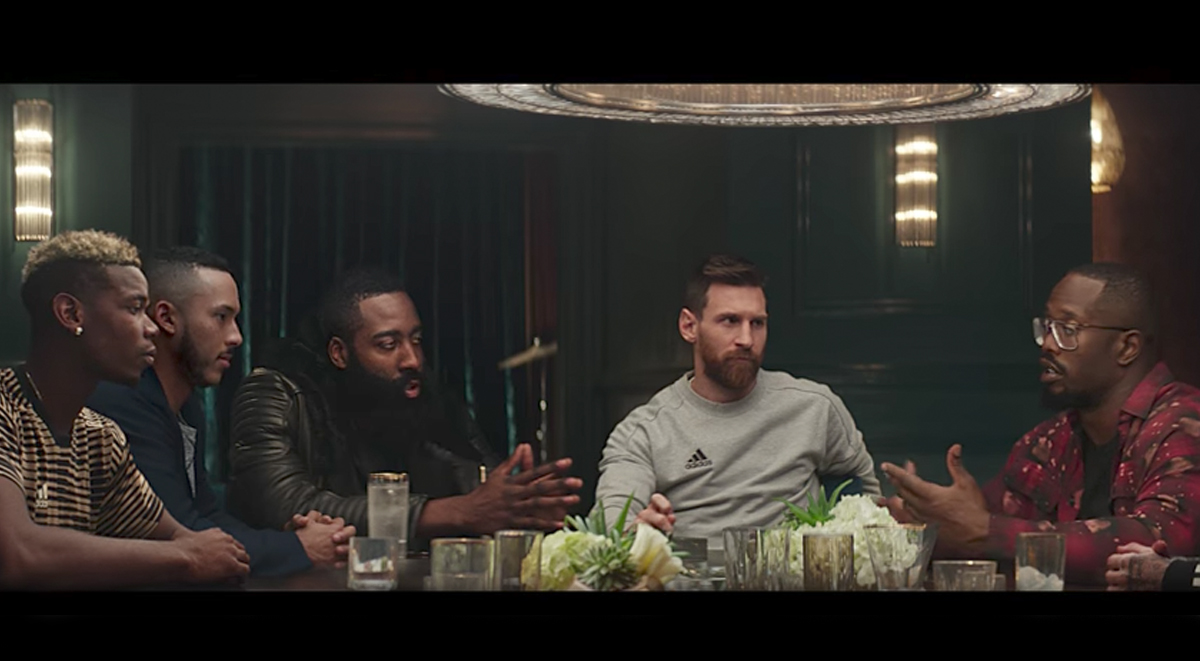
“Calling All Creators” brings all these stars to a table together with some noticeable camera shots to focus on their new Adidas clothes and shoes to deliver the brand’s manifesto piece by piece. Adidas wanted to bring this notable group of celebrities together to inspire others to think differently in their game, life and world.

By calling on these plethora of stars to endorse the brand, Adidas is able to gain a competitve advantage. This is becasue Adidas will be able to enhance the consumers positive feelings towards their favourite celebrities which can then be transferd to the brand when consumers see them promoting Adidas products, creating a positive association.
Blog 2: Motivation
Motivation is the process that leads people to behave as they do and can occur when a need is aroused that the consumer wishes to satisfy. Once a consumers needs have been recognised a sense of pressure exists that drives the consumer to satisfy and eliminate that need.
Abraham Maslow formulated a hierachy of needs that specified certain levels of motives. Marketers look to target a particular level of needs for their products because it indirectly specifies certain types of products benefits people might be looking for.
Being a sportwear brand Adidas realises that most consumers motives behind purchasing their products usally involve fitness and staying active. This is why they have been targeting self actualisation needs though focusing on consumer’s fitness goals and to encourage and motivate consumers to excerise. To do this Adidas have partnered up with FitBit to produce the “Fitbit ionic Adidas edition”.

The product is supposed to help people train better with unique adidas made training sessions and on screen workouts designed to improve your form. It also includes step by step coaching that guides you through the moves.
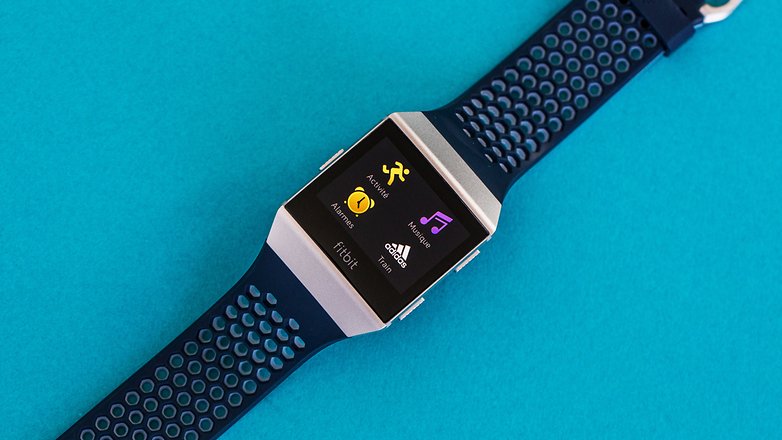
I belive the partnership with FitBit to create a device associated with setting and achieving fitness goals showcases how Adidas understands their consumers motives behind purchasing their products and uses this understanding to influence consumer behaviour. This is because they are a brand that promotes athletes and consumers to perform better, play better and feel better. Consumers are drawn to this as they make them feel inspired and motivated to get active.
Blog 3: The Self
Consumers will more than likely purchase certain brands or products because the person will want to either highlight or conceal some aspect of ourselves. These products can range from luxury items like a car to simple items like the clothes we wear. The self concept plays a huge role in this as it can help consumers make purchase decisions and influences consumer behaviour.
The self concept summarises the beliefs an individual holds about their own attributes and how they evaluate these qualities. Although a persons overall self concept may be positive, there are certainly parts that they will evaluate more positively than others. For example a consumers self assessment can be quite distorted when it comes to physical appearance. Marketers have realised this and have made an effort in their marketing campaigns to target and provoke ones self concept to create need in their products.
In August of 2018 Adidas launched their She Breaks Barriers initiative in a commitment to remove barriers for females in sports. The campaign highlights the barriers girls and women are facing in sport and invites everyone to level the playing field and co-create the future of women’s sport.
The initiative was designed to inspire, enable and support the next generation of female athletes, creators and leaders. In order to achieve this Adidas uses popular female sports stars to alter young girl’s and women’s self concept by promoting their feelings of control strength and competency.

From Adidas’ She Breaks Barriers initiative it has helped destroy any negative stigmas associated with women in sports and has allowed women to re-evaluate their self concept more positively.
References
Blog 1;
Oster, E. and Oster, E. (2019). Adidas Brings Superstars Like Lionel Messi and Karlie Kloss Together for a Feast in Its Latest Spot. [online] Adweek.com. Available at: https://www.adweek.com/creativity/adidas-brings-superstar-athletes-like-lionel-messi-and-aaron-rodgers-together-for-a-feast-in-its-latest-spot/ [Accessed 7 Apr. 2019].
Medium. (2019). 5 Reasons Why Celebrity Endorsements Work!. [online] Available at: https://medium.com/strategic-content-marketing/5-reasons-why-celebrity-endorsements-work-47de8515b072 [Accessed 7 Apr. 2019].
brandchannel:. (2019). Calling All Creators: Adidas Brings All-Star Talent and Tech to the Table. [online] Available at: https://www.brandchannel.com/2017/12/20/adidas-calling-all-creators-122017/ [Accessed 7 Apr. 2019].
Soloman, R, Russel-Bennett, R, Previte, J (2018) ‘Consumer Behaviour: Buying, Having, Being’, Pearson Education Australia, 4th Edition, Ch 4
Blog 2;
Fitbit.com. (2019). Fitbit Ionic: adidas edition watch. [online] Available at: https://www.fitbit.com/eu/adidas [Accessed 28 Apr. 2019].
Withers, B. (2019). Fitbit’s Real Reason to Partner With Adidas — The Motley Fool. [online] The Motley Fool. Available at: https://www.fool.com/investing/2017/11/11/fitbits-real-reason-to-partner-with-adidas.aspx [Accessed 28 Apr. 2019].
Soloman, R, Russel-Bennett, R, Previte, J (2018) ‘Consumer Behaviour: Buying, Having, Being’, Pearson Education Australia, 4th Edition, Ch 6
Blog 3;
Vmagazine.com. (2019). Adidas Launches “She Breaks Barriers” Initiative | V Magazine. [online] Available at: https://vmagazine.com/article/adidas-launches-she-breaks-barriers-initiative/ [Accessed 23 May 2019].
adidas News Site | Press Resources for all Brands, Sports and Innovations. (2019). adidas kicks off Initiative to break down barriers faced by Women and Girls in Sport. [online] Available at: https://news.adidas.com/american-football/adidas-kicks-off-initiative-to-break-down-barriers-faced-by-women-and-girls-in-sport/s/87fa878d-dbe4-4619-826d-f4b71e1b33cc [Accessed 23 May 2019].
Soloman, R, Russel-Bennett, R, Previte, J (2018) ‘Consumer Behaviour: Buying, Having, Being’, Pearson Education Australia, 4th Edition, Ch 7

 Bens blog